11♋08 to 25♋15
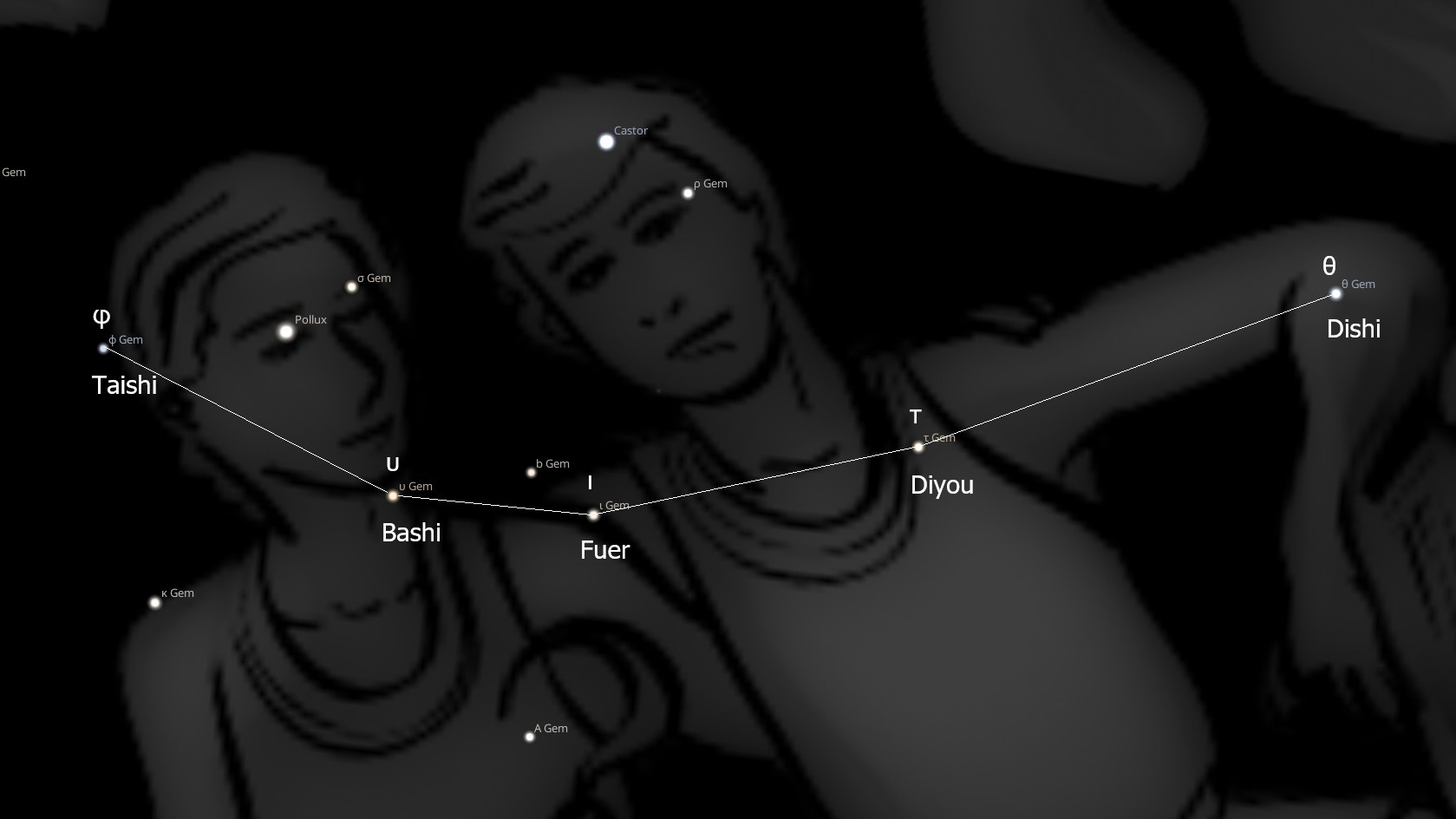
Five Feudal Kings Asterism
The 22nd Chinese lunar mansion is named 井宿 Jing, “Well Mansion.” It is the first of the seven mansions of the Vermilion Bird of the South.
The sixth asterism of the Well Mansion is named 五諸侯 Wuzhuhou, “Five Feudal Kings.” It comprises five stars from the constellation Gemini. [1]
The Five Feudal Kings asterism represented five lords who served as political advisors and jointly assisted the emperor in decision-making. Their main functions were to scare away trouble and warn against unforeseen events. They also presided over the rise and fall of the Princes.
The five advisors did not go to the country but served the emperor in the inner court, symbolizing the core political group permanently stationed in the Heavenly Court. In astrology, they were given a warning function.
The five stars of the Five Feudal Kings asterism were ranked in order of rank as:
1. θ Gem – Dishī, Imperial Tutor. Primarily responsible for oversight.
2. τ Gem – Dìyǒu, Imperial Friend. Symbolizes military preparedness.
3. ι Gem – Fùěr, Three Dukes. Corresponds to the system of etiquette and law.
4. υ Gem – Bàshì, Doctor. In charge of agricultural taxation.
5. φ Gem – Tàishì, Grand Historian. Associated with judicial and criminal law. [2]
| 2000 | 2050 | Star | Name | Represents | Orb |
| 11♋08 | 11♋50 | θ Gem | Dishī | Imperial Tutor | 1°40′ |
| 15♋27 | 16♋09 | τ Gem | Dìyǒu | Imperial Friend | 1°10′ |
| 18♋58 | 19♋40 | ι Gem | Fùěr | Three Dukes | 1°30′ |
| 21♋21 | 22♋03 | υ Gem | Bàshì | Doctor | 1°20′ |
| 25♋15 | 25♋57 | φ Gem | Tàishì | Grand Historian | 1°00′ |
Changes in the five stars of the Five Feudal Kings were considered important omens:
A stable and bright starlight indicates a wise and just government, and the submission of feudal lords.
Dim or shifting starlight warns of plotting or usurpation by feudal lords, or of unrest on the frontier.
Abnormal brightness foreshadowed rebellions in their fiefdoms.
The appearance of a comet in the Five Feudal Kings asterism was regarded as a sign of major political changes. [3]
The information below on the first two, or most senior advisors, was found on Baidu. Please let me know in the comments section if you find any further details on the Chinese associations with these five stars.
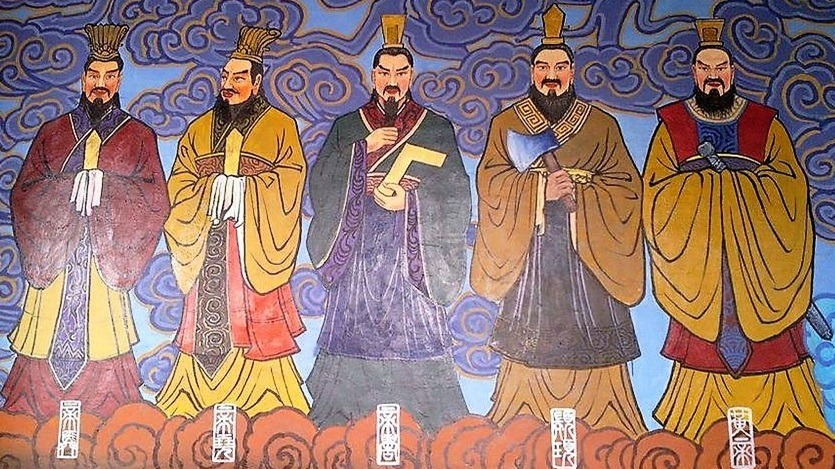
Dishī – The Imperial Tutor
The Imperial Tutor (θ Gem) corresponds to the minister who assists the monarch in the traditional astronomical observation system. It was a harbinger of “great floods under heaven.” The Imperial Tutor bears the astrological connotation of assisting the monarch and correcting gains and losses. It ranked next to the Three Dukes and was responsible for planning and deliberation. In the traditional astrological system, the Imperial Tutor Star has a dual symbolic function:
Political Implication: Represents the highest advisor to the monarch, echoing the Three Dukes Star (ι Gem) in the Purple Palace.
Disaster Warning: Changes in brightness are correlated with major floods. This star was incorporated into hydrological prediction models during the Ming and Qing dynasties, and its observational data corresponded to rainfall records. [4]
Dìyǒu – The Emperor’s Friend
The core functions of the Emperor’s Friend (τ Gem) include:
Reporting and exposing misconduct: Monitoring the conduct of officials and reporting illegal activities.
Preventing Unexpected Events: Preventing Sudden Events and Natural Disasters.
Regulating Yin and Yang: Harmonizing the laws governing the operation of heaven and earth.
Observe gains and losses: assist the emperor in examining the advantages and disadvantages of his policies. [3]
