
Mansion XXII – Jing (Well)

STARS: Major | All | Constellations | Chinese | About


05♋19 to 05♌43
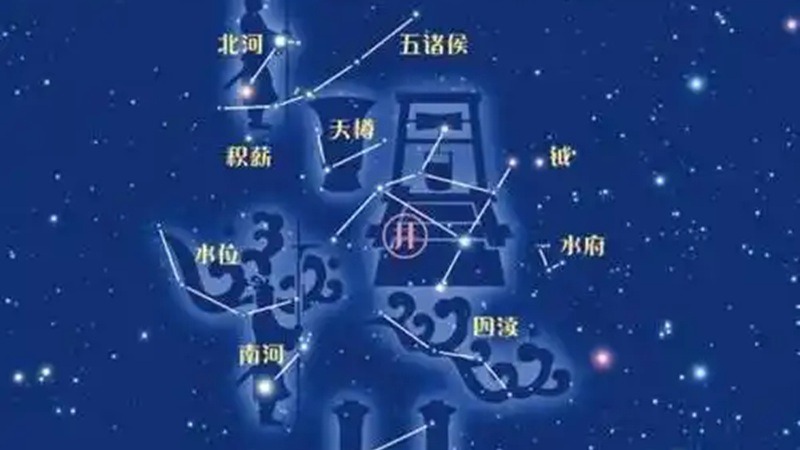
Mansion XXII – Jing (Well)

The 22nd Chinese lunar mansion is named 井宿 Jǐng Su, “Well Mansion.” It is the 1st of the 7 mansions of the Vermilion Bird of the South. 

The Well Mansion contains 22 star officials (asterisms) and 63 stars, distributed in the constellations Auriga, Gemini, Cancer, Canis Major, Canis Minor, Carina, Columba, Monoceros, Orion and Puppis. [1]

#AsterismEnglish2000ConstellationsStars
1井 (Jǐng)Well05♋19Gemini8
2鉞 (Yuè)Battle Axe03♋26Gemini1
3南河 (Nánhé)South River21♋40Canis Minor3
4北河 (Běihé)North River19♋06Gemini3
5天樽 (Tiānzūn)Celestial Wine Cup14♋13Gemini3
6五諸侯 (Wuzhūhóu)Five Feudal Kings11♋08Gemini5
7積水 (Jīshuǐ)Accumulated Water16♋52Auriga1
8積薪 (Jīxīn)Pile of Firewood23♋41Gemini1
9水府 (Shuǐfǔ)Irrigation Official01♋51Orion4
10水位 (Shuǐwèi)Water Level12♋16Canis Minor/Cancer4
11四瀆 (Sìdú)Four Rivers06♋16Monoceros/Gemini4
12軍市 (Jūnshì)Market for Soldiers07♋12Canis Major6
13野雞 (Yějī)Wild Cockerel11♋45Canis Major1
14丈人 (Zhàngrén)Grandfather18♊43Columba2
15子 (Zǐ)Son26♊26Columba2
16孫 (Sūn)Grandson03♋04Columba2
17闕丘 (Quèqiū)Palace Gate12♋47Monoceros2
18天狼 (Tiānláng)Celestial Wolf14♋05Canis Major1
19弧矢 (Húshǐ)Bow and Arrow18♋35Canis Major/Puppis9
20老人 (Lǎorén)Old Man14♋59Carina1

Constellation Jing the Well

29♉25 to 00♊37

Ma Duanlin (1317)

The eight stars of Jing (井) are arranged in the clear river. One star is named Yue (钺), which is placed beside Jing. Three stars each are in the north and south directions. Three stars of Tianzun (天樽) are above Jing, and five feudal lords are arranged horizontally above Zun. Above Hou (侯) is the accumulated water west of the river, and the pile of firewood is on the east side. Four stars below Yue (钺) are named Shuifu (水府). Four stars are arranged east of Shuifu (水位). Four rivers are arranged horizontally in the south of the river. At the bottom of the south river is Junshi (军市), which has thirteen stars in a circle, with a wild pheasant spirit in the middle. Below Sunzi (孙子) and Zhangren (丈人) are two stars each, according to one interpretation. Three stars of Queqiu (阙丘) are east of the south of the river, and below Queqiu is a wolf with a lush and fluffy appearance. Nine curved bows are on the left side, and an arrow is about to shoot the stubborn wolf in the chest. There is an old man in the south pole, who will live a long and healthy life.

  Jing (井) is thirty-four degrees. Gan Shi (甘氏) ​​says that Jing has eight stars in the river, which govern spring water, and the sun, moon, and five planets pass through it as the central path. Shi Shi (石氏) calls it Dongjing (东井), also called Tianjing (天井), which governs the positions of feudal lords, imperial relatives, and the three dukes. Therefore, if the well is bright and large, it signifies the enfeoffment of marquises and the establishment of states; if it shakes or loses its color, it signifies the execution of marquises and relatives, the demotion and execution of the Three Dukes, and the suffering of the Imperial Tutor. Zhang Heng said that the well is the southern gate of heaven, the path of the ecliptic, and the place where the emperor resides, in charge of water balances and the fairness of laws and decrees. When the king uses the law fairly, the well is bright and orderly. The star Yue, attached to the well, signifies that the emperor will seize those who are extravagant and licentious and execute them, therefore its brightness is not desired. If the well is large and level with the well, or if it shakes, the emperor will use the Yue on his ministers. When the moon is in the well, there will be wind and rain. It is also said that the well is the emperor’s palace. Darkness, brilliance, solar and lunar eclipses, and the reversal of the five planets signify that ministers will plot rebellion and war will break out. There are six stars in the middle, which should not be bright, as brightness signifies floods. There are three stars each in the north and south rivers, flanking the eastern well. One is called Tian Gao, the gate of heaven, in charge of passes and bridges. The south of the river is called Nan Xu, Nan Guan, Yang Men, Yue Men, and Quan Xing, in charge of fire. The Northern River is also called the Northern Garrison, the Northern Palace, the Yin Gate, the Hu Gate, and the Heng Star, and it governs water. Between the two garrisons lies the constant path of the three luminaries (sun, moon, and stars). If the River Garrison is disturbed, war will break out in China. The three stars of the Heavenly Zun are south of the Five Princes, and they govern the provision of gruel and porridge for food and drink. Zhang Heng says it is for the poor and hungry. Brightness indicates abundance, darkness indicates desolation, or some say darkness is auspicious. The five stars of the Five Princes are northeast of the Eastern Well, near the Northern River, and govern spies and warnings against unforeseen events. They also govern yin and yang, observe gains and losses, and govern the emperor’s heart. They are: 1. Imperial Teacher, 2. Imperial Friend, 3. Three Dukes, 4. Erudite Scholar, 5. Grand Historian. Also, 5. Grand Master. These five often resolve doubts for the emperor. Bright and lustrous stars indicate great order in the world; sharp points indicate impending disaster. Zhang Heng also said that the Five Princes govern yin and yang, observe gains and losses, and if they are bright and lustrous, and of equal size, it is a blessing for the country. He also said that red indicates abundance, and darkness indicates desolation. The star Jishui (积水) is located in Hebei, used for supplying wine. Its absence signifies disaster. It is also said to indicate floods. The star Jixin (积薪) is located east of Jishui, used for cooking. Its brightness indicates a prosperous ruler; its presence with fire signifies a severe drought. The four stars of Shuifu (水府) are located southwest of Dongjing (东井), representing the water official. Their divination is the same as Shuiwei (水位). The four stars of Shuiwei (水位) are located east of Dongjing, governing water balance and overflows. Therefore, Wuxian praised them, saying, “The four stars of Shuiwei indicate overflows. If they move near the North River, the country will be submerged; if water, fire, or guest stars guard or violate them, all rivers will overflow.” The four stars of Sidu (四渎) are located south of Jing (井) and east of Xuanyuan (轩辕), representing the accumulated essence of the Yangtze, Yellow, Huai, and Ji rivers. Their brightness indicates flooding. The thirteen stars of Junshi (军市), shaped like coins, are located southeast of Shen (参), representing the market for celestial military trade. Their presence with guest stars or Venus and Mars signifies a great famine in the army. The star Yeji (野鸡) is located in Junshi, signifying strange and unusual events. Sharp angles and trembling indicate military disasters; their movement signifies war among feudal lords. The two stars southwest of the military market are called the Elder, the two stars east of the Elder are called the Son, and the two stars east of the Son are called the Grandson. The Elder governs long-lived ministers; without seeing the Elder, one cannot communicate with them. The Son and Grandson both serve the Elder, supporting each other; their absence signifies disaster, while maintaining the status quo brings no harm. The three stars of Queqiu, east of the South River, govern the Xiangwei, the twin towers of the Son of Heaven, and the two observation posts of the feudal lords. If Venus and Mars guard it, war will break out. The one star of the Wolf below Queqiu, southeast of Jing, is the Wild General, signifying killing and plundering. Its color is constant and should not change; if it changes color or trembles, thieves will rise, barbarian armies will rise, and people will eat each other. Restlessness indicates the ruler is not at peace, not residing in his palace, but roaming the world. Zhang Heng said, “If one resides in the wrong place, people will eat each other.” Yellow and white colors are auspicious, black is inauspicious; red and sharp angles indicate war. The same applies if Venus and Mars guard it. The nine stars of the Arc and Arrow constellation are located southeast of the Wolf constellation, forming the Heavenly Bow. They are used to guard against thieves and are often directed towards the Wolf. If the Arc and Arrow constellation wavers abnormally, there will be many thieves; if it is bright, a large-scale war will break out. If the Wolf’s Arc is drawn, harm will extend to the barbarians, and the world will be in chaos. It is also said that when the Heavenly Bow is drawn, the whole world will be at war, and the ruler and his ministers will plot against each other. Zhang Heng said that when it is full, the world will be at war. The star Old Man is located south of the Arc and is also called the South Pole. It is usually seen at dawn on the Autumn Equinox and sets at dusk on the Spring Equinox. It is usually observed

  in the southern suburbs at the Autumn Equinox. If it is bright and large, the ruler will have a long life and the world will be at peace; if it is not seen, the ruler will be worried. *The Astronomical Records of the Two Dynasties*: The eight stars of the Well constellation are 69 degrees from the first star north of the western fan. The star of Chao is slightly less than 69 degrees from the pole and enters Orion at 8.5 degrees. The three stars of the Northern River constellation are 61.5 degrees from the eastern star and enter the Well constellation at 20 degrees. The three stars of the Southern River constellation are 83.5 degrees from the eastern star and enter the Well constellation at 21 degrees. The three stars of Tianzun are 68 degrees from the western star, entering the constellation Jing at 16 degrees. The five stars of Wuzhuhou are 56.5 degrees from the western star, entering the constellation Jing at 6.5 degrees. The star of Jishui is 54.5 degrees from the western star, entering the constellation Jing at 18 degrees. The star of Jixin is 65.5 degrees from the western star, entering the constellation Jing at 27 degrees. The four stars of Shuifu are 76.5 degrees from the western star, entering the constellation Shen at 7.5 degrees. The four stars of Shuiwei are 73.5 degrees from the western star, entering the constellation Jing at 18 degrees. The four stars of Sidu are 86 degrees from the western star, entering the constellation Jing at 2 degrees. The thirteen stars of Junshi are 107.5 degrees from the western star, entering the constellation Jing at 1 degree. The star of Yeji is 109.5 degrees from the western star, entering the constellation Jing at 4.5 degrees. The two stars of Zhangren are 128 degrees from the western star, entering the constellation Shen at 4 degrees. The two stars of Zi are 128 degrees from the western star, entering the constellation Shen at 9 degrees. Sun Erxing is 125 degrees from Xixing, entering the constellation Jing at 6 degrees. Queqiu Erxing is 91 degrees less from Daxing, entering the constellation Jing at 15 degrees. Lang Yixing is 17.5 degrees from Xixing, entering the constellation Jing at 10 degrees. Hu Shi Jiuxing is 114 degrees from Xixing, entering the constellation Jing at 15 degrees. Laoren Yixing is 143 degrees from Xixing, entering the constellation Jing at 3 degrees.

  The *Song Zhongxing Astronomical Records* states: “The Old Man of the South Pole is south of Hu Shi, governing the lifespan of all people. Since the North Pole is in Chou Gen, the South Pole is in Wei Kun. The South Pole is 36 degrees below the Earth’s surface, making it invisible. Therefore, its spirit emerges from the Earth to appear in the South, hence the name ‘Old Man of the South Pole.’ However, its emergence is not very far, so its appearance is unpredictable; its appearance is auspicious. Its power and position are equal, comparable to the Dipper, assisting the Supreme God. Therefore, although they are in the same constellation, Jing cannot govern it.”[2]

Song History (1346)

The eight stars of Dongjing (Eastern Well) are the southern gate of the heavens, traversed by the ecliptic. The seven luminaries constantly pass through it, making it the celestial guardian, in charge of water balance matters, and the means by which laws are applied. Wu Mi’s divination states: “The three luminaries (sun, moon, and stars) are on the correct path within Jing (Well). If the five planets remain and pass through it, it signifies a world without order. It is undesirable for it to be bright; if it is bright, there will be great floods.” Another divination states: “Using laws to maintain order, Jing (Well) will be bright. If the Yue (Axe) star is near Jing (Well), it signifies the execution of those who are extravagant and licentious; if it is bright and aligned with Jing (Well), it signifies the use of the Yue (Axe) on high-ranking officials.” The lunar constellations indicate wind and rain. A solar eclipse signifies drought in Qin, displacement of people, and disloyalty; a halo indicates much wind and rain; a blue-red aura on the sun signifies a crown, indicating the emperor establishing marquises and kings. A lunar eclipse signifies internal strife, the dismissal of high-ranking officials, unease in the empress, poor harvests, and war and mourning. A lunar halo signifies drought, war, displacement of people, national distress, and a general amnesty; an imbalance of yin and yang results in a halo. A halo with three layers in the third month signifies great floods, and in the twelfth month, a day of Ren or Gui signifies a general amnesty. If the moon violates this, the general will die in battle, the water official will be dismissed, and punishments will be unjust; if it violates the Well and Axe, high officials will be executed, and there will be water-related incidents. If Jupiter violates this, the king will be strict with the law, there will be many lawsuits, floods will occur, and generals will be displeased; if it violates the Well and Axe, close ministers will rebel, and war will break out; if it moves backward into the Well, rivers will be blocked. If Mars violates this, those who start wars first will suffer calamity, and it is also said that the emperor will be defeated by water; if it enters and guards this for ten days, there will be war under heaven, and nobles will be uneasy; if it guards this for thirty days, forming the Gou Si, with its horns moving and its color turning reddish-black, nobles will be affected, all rivers will overflow, and war will break out. If Saturn enters and violates this, war will break out in the northeast, and high officials will be worried; if it enters the Well and Axe, the king will be displeased; if it is in the beak and moves away from the East Well, there will be no land below. If Venus violates this, the blame lies with the general; if it guards this for a long time, the ruler will lose his way, and ministers will rebel. If Mercury violates this, if the star advances, war will advance; if it retreats, war will retreat, punishments will be fair, and it is also said that northern armies will rise, and the year will be bad. If the horns are moving, and the color is reddish-black, it signifies water and war. If a guest star invades the constellation, the harvest will be poor, ministers will be executed, there will be land reclamation projects, and children will spread rumors. If a comet invades the constellation, the people will slander, the country will lose its governance, ministers will be executed, and there will be military disasters. If a meteor invades the constellation, in spring and summer, there will be rebellion in Qin; in autumn and winter, there will be worries in the palace. The divination for the year Yi Si: If the meteor is yellow and lustrous, the country will be at peace; if it is reddish-black, the people of Qin will be displaced, and there will be floods. If dark blue clouds invade the constellation, the people will suffer from disease; if it is yellowish-white and lustrous, a guest will come to speak of matters related to water. If black clouds enter the constellation, there will be great floods. This is usually observed on the first day of the first month. If there are clouds above the constellation Jing, there will be many floods in the year.

  According to the bronze instrument of the Yongyuan era of the Han Dynasty, the constellation Jing is 30 degrees; the bronze instrument of the Kaiyuan era of the Tang Dynasty is 33 degrees, 70 degrees from the pole. The measurement of Jing You is also 33 degrees, 69 degrees from the pole of the northwest star.

  The five stars of the five princes are located north of the constellation Jing in the east. They are in charge of resolving doubts, investigating and punishing, guarding against unforeseen events, regulating yin and yang, and observing gains and losses. They are also said to govern the emperor’s heart. The first is the Imperial Tutor, the second the Imperial Friend, the third the Three Dukes, the fourth the Erudite Scholars, and the fifth the Grand Historian; these five are always there to resolve the Emperor’s doubts. If a star is bright and lustrous, the world is at peace. If the five rites are complete, the stars will shine brightly and not encroach upon each other; if they are dim, nobles will plot against the Emperor; if they are sharp or pointed, disaster is imminent. If Jupiter (Jupiter) afflicts it, war will break out for three years. If Mars (Mars) afflicts it, ministers will rebel but fail. If Venus (Venus) afflicts it, feudal lords will raise armies and lose their states; if it is visible in broad daylight, feudal lords will be executed. If a guest star afflicts it, the royal court will be in chaos, feudal lords will lose their territories, and the Qin state will suffer; if it is present, the relatives of feudal lords will lose their positions. If a comet or a comet afflicts it, law-abiding officials will be executed, or, according to another interpretation, a high-ranking official will be responsible, for a period of one year. If clouds afflict it and turn pale, feudal lords will suffer loss; if not, ministers will be executed.

  The star Jishui, located northwest of the Yellow River, is the proper place for supplying wine and food. If it is not seen, it is a disaster. If Jupiter afflicts it, water and crops will fail, fish and salt will be expensive, and the people will suffer famine. If Mars afflicts it, it signifies war and floods. When the planet Mercury (Morning Star) invades its influence, it signifies floods and droughts. When a guest star invades it, war breaks out, there are great floods, and ministers are worried, for a period of one year. When pale clouds invade it, there will be floods throughout the land.

  The star Pixin (Accumulated Firewood Star) is located northeast of Pixin, serving as the main source of fuel for cooking. If the star is dim, the five grains will fail to ripen. When Mars (Mars) invades it, it signifies drought, war, and fire disasters. When a guest star guards it, firewood will be expensive. When red clouds invade it, there will be fire disasters.

  The three stars of the Southern River (Helios) and the Northern River (Helios) flanking the Eastern Well (Eastern Well) are also called the Gate of Heaven, governing passes and bridges. The Southern River is also called the Southern Garrison, the Southern Palace, the Yang Gate, the Yue Gate, and the Power Star, governing fire. Between the two River Garrisons lies the constant path of the Sun, Moon, and five planets. If the River Garrison is disturbed, war will break out in China. If the River Stars are not complete, roads will be impassable and waters will overflow. When the Moon rises or falls between the two Rivers, the people will be at peace, the year will be bountiful, and there will be no war; if it rises south of the middle path, the ruler will dislike it, and ministers will not be loyal. A bright star signifies good fortune; a dim or wavering star indicates border conflicts, rebellion by distant peoples, and general worry. If the moon occupies this position, it signifies worry for the central state, including war, mourning, drought, and plague; if it travels southwest, it signifies war and drought; if it enters the southern border region, it signifies plague among the people; a halo around the moon indicates earthworks; if it is accompanied by a moon, war will break out in all directions; if it passes through the south and guards the south, it signifies punishments will be lost. If Jupiter occupies this position, the north signifies worry. If Mars occupies the two rivers, it signifies war; if it stays there for more than thirty days, rivers will overflow; if it stays in the south of the river, grain will not ripen, and the empress will worry; if it stays in the south and guards the west, fruit will not be harvested; if it is in the east, there will be attacks and wars. If Saturn travels along the south of the river, it signifies drought and people’s worry; if it guards this position, it signifies war and impassable roads. If Venus occupies this position for thirty days, rivers will overflow; it also signifies treachery; if it guards the two rivers, it signifies war. If a guest star guards this position, it signifies drought and plague. If a comet or a comet appears, it signifies war; if it guards this position, it signifies drought. If a meteor appears, it signifies war, mourning, and worry for the border regions. When pale clouds enter, rivers become impassable; when they emerge red, the emperor’s army turns against the feudal lords. When yellow clouds enter, there is a virtuous decree; when they emerge, disaster strikes.

  The Northern River also has three stars: the Northern Garrison, also called the Northern Palace, the Yin Gate, the Hu Gate, and the Heng Star, which govern water. The appearance, entry, stay, or presence of these five stars indicates war; their transgression indicates the death of a woman; their presence signifies sorrow for the north. When Jupiter enters the Northern Garrison, a high-ranking official is executed. When Mars enters the Northern Garrison from the west, there will be a death within sixty days; if it enters from the east, there will be war within ninety days; another interpretation is that if it leaves the Northern Garrison and guards it, a border general who attacks a foreign country without consulting the emperor will be victorious. When Saturn guards it, war breaks out, but there will be a pardon within sixty days; another interpretation is that there will be land reclamation; if it guards the western garrison, the five grains will not ripen. When Venus leaves the Northern Garrison, there will be a death for a woman within thirty days and internal strife; if it guards the Yin Gate, war will break out throughout the land within one hundred days. When the planet Mercury guards it, foreign armies rise, and border officials plot. If it remains stationary, armies will rise in all directions. When a guest star invades it, there will be loss abroad, and traitors within. If it enters from the east, armies will rise, lasting ninety days; if it enters from the west, there will be loss, lasting sixty days. If it guards it, there will be great floods. When a meteor passes between the two rivers, there will be calamity throughout the land. If it enters, it means northern armies will invade China, and passes will be blocked. When pale clouds invade it, there will be border wars, epidemics, and worries for the northern ruler.

  The four stars of the Four Rivers are located east of the southern wall of the Eastern Well, representing the essence of the Yangtze, Yellow, Huai, and Ji rivers. If they are bright and large, all rivers will overflow.

  The four stars of the Water Rank are located east of Jixin, or northeast of the Eastern Well, governing the balance of water. If Jupiter invades it, there will be great floods; if it moves south, there will be drought. When Mars guards it, the fields will not be cultivated. When a guest star invades it, waterways will be blocked, and hidden armies will be in the water. If a guest star is Mercury or Mars, and it guards or invades it, all rivers will overflow. The appearance of a comet or a meteor signifies great floods, war, and crop failure. A meteor entering this area indicates flooding, crop spoilage, and famine. Red clouds entering this area signify drought and famine.

  The three stars of the Heavenly Jar (天罇) are located south of the five feudal lords, or, according to another account, north of the Eastern Well (东井). This is a jar, used to hold porridge to feed the poor and hungry. Brightness indicates abundance; darkness indicates a bad year.

  The two stars of Queqiu (阙丘) are located south of the Yellow River, representing the emperor’s twin gates and the feudal lords’ two observation posts. If Venus and Mars guard this area, war

  will break out at the gates. The thirteen stars of the Military Market (军市) are shaped like celestial coins, representing the celestial army’s trading market, where goods and supplies are exchanged. Many stars in the center indicate surplus military provisions; few indicate famine. The moon entering this area signifies war and unease. Five stars guarding this area indicate the army’s food supply will be cut off. A guest star entering this area indicates assassination attempts, generals leaving, and soldiers dying. A meteor appearing signifies the appearance of a great general.

  The star Wild Pheasant (野鸡) in the Military Market signifies strange occurrences. Its appearance outside the market indicates war throughout the land. Stillness is auspicious; sharp angles are inauspicious.

  The Wolf Star, southeast of the East Well Star, represents a wild general, signifying invasion and plunder. Its color is constant, indicating a lack of desire to move. Sharp angles or movement indicate war; bright light signifies expensive weapons; shifting position indicates cannibalism; yellow or white color is inauspicious; red signifies war. If the moon enters its phase, there will be war but no battle; another interpretation is a water-related event. A lunar eclipse in the Wolf Star indicates foreign plots. If five planets enter its phase, a large-scale war will break out, and there will be much theft. If a comet or celestial comet enters its phase, theft will occur. If a guest star guards its phase, a yellowish-green color is auspicious; black signifies sorrow. Red clouds entering

  its phase indicate war. The Nine Stars of the Bow and Arrow, southeast of the Wolf Star, represent the Heavenly Bow, signifying scheming to prevent theft, and always aiming arrows at the Wolf Star. Wu Mi said, “When the Heavenly Bow is drawn, northern armies will rise.” He also said, “The world will be at war.” Great movement and brightness indicate much theft; arrows not aimed directly at the Wolf Star indicate much theft; when fully drawn, the world will be filled with thieves. The moon entering the Bow and Arrow indicates ministers overstepping their bounds. A halo around the moon signifies a major war. The entry of a guest star indicates the surrender of southern barbarians; if they are abandoned, autumn snow will fall, resulting in a failed harvest; if they are defended, foreign barbarians will starve; if they move in and out, it signifies the coming and going of troops. A meteor entering the sky indicates a northern army rising up, massacring cities and killing generals. Red clouds entering the sky indicate the people’s alarm, or it signifies the northern army entering China.

  The Old Man star, south of the Arc and Arrow stars, also called the South Pole star, is usually seen on the morning of the Autumn Equinox in the Bing position, observed in the southern suburbs, and disappears on the evening of the Spring Equinox in the Ding position. Its appearance signifies peace and prosperity, and a long and healthy emperor; its absence signifies war, famine, and the ruler’s worry. The entry of a guest star indicates plague among the people, or war, and worry for the elderly. A meteor passing by the sky indicates many illnesses among the elderly, or war. White clouds entering the sky indicate the impending destruction of the nation.

  The Two Father-in-Law stars, southwest of the Military Market, signify longevity, mourning the elderly and widows, and sympathizing with the poor. Their disappearance signifies that officials cannot communicate with their subjects. The

  Two Son stars, east of the Father-in-Law star, signify serving the father-in-law. Their absence signifies disaster.

  The second star, Sun, is located east of the second star. It represents the Heavenly Grandson serving the father-in-law, supporting each other and living together with filial piety and love. If it is not seen, it signifies disaster; if it remains in the same position, it signifies no blame.

  The four stars of the Water Mansion, located southwest of the East Well constellation, are the Water Officials, in charge of dikes, roads, and ditches, for the preparation of defenses. When Mars enters this constellation, it signifies a strategist. When Mercury enters, it signifies water. When a guest star enters, it signifies a great flood. When a shooting star enters, if its color is blue, it signifies a great flood in the area; if red, it signifies drought.

  According to the “Song of Walking the Heavens,” from the Five Princes to the eighteen constant stars of the Water Mansion, all belong to the East Well constellation. The “Book of Military Secrets” assigns two stars to the Zhangren constellation, and one each to the Zi and Sun constellations, to the Niu constellation. The “New Book of Qianxiang” assigns the Zhangren and Zi constellations to the Shen constellation, and the Sun constellation to the Well constellation; it also assigns the four stars of the Water Mansion to the Shen constellation. The “Book of Military Secrets” assigns the Water Mansion to the Well constellation. The rest are consistent with the “Song of Walking the Heavens.” [3]

References

  1. Well Consellation – Baidu Encyclopedia.
  2. General Examination of Literature, Volume 279, Part 2, Ma Duanlin, 1317.
  3. Song History, Volume 51, Chapter 4, 1346.

Leave a Reply

Your email address will not be published. Required fields are marked *

*
*
Website