
FIXED STARS: Major Stars | 1000+ Stars | Constellations | About
Namalsadirah I at 10°11′ Capricorn has an orb of 1°50′
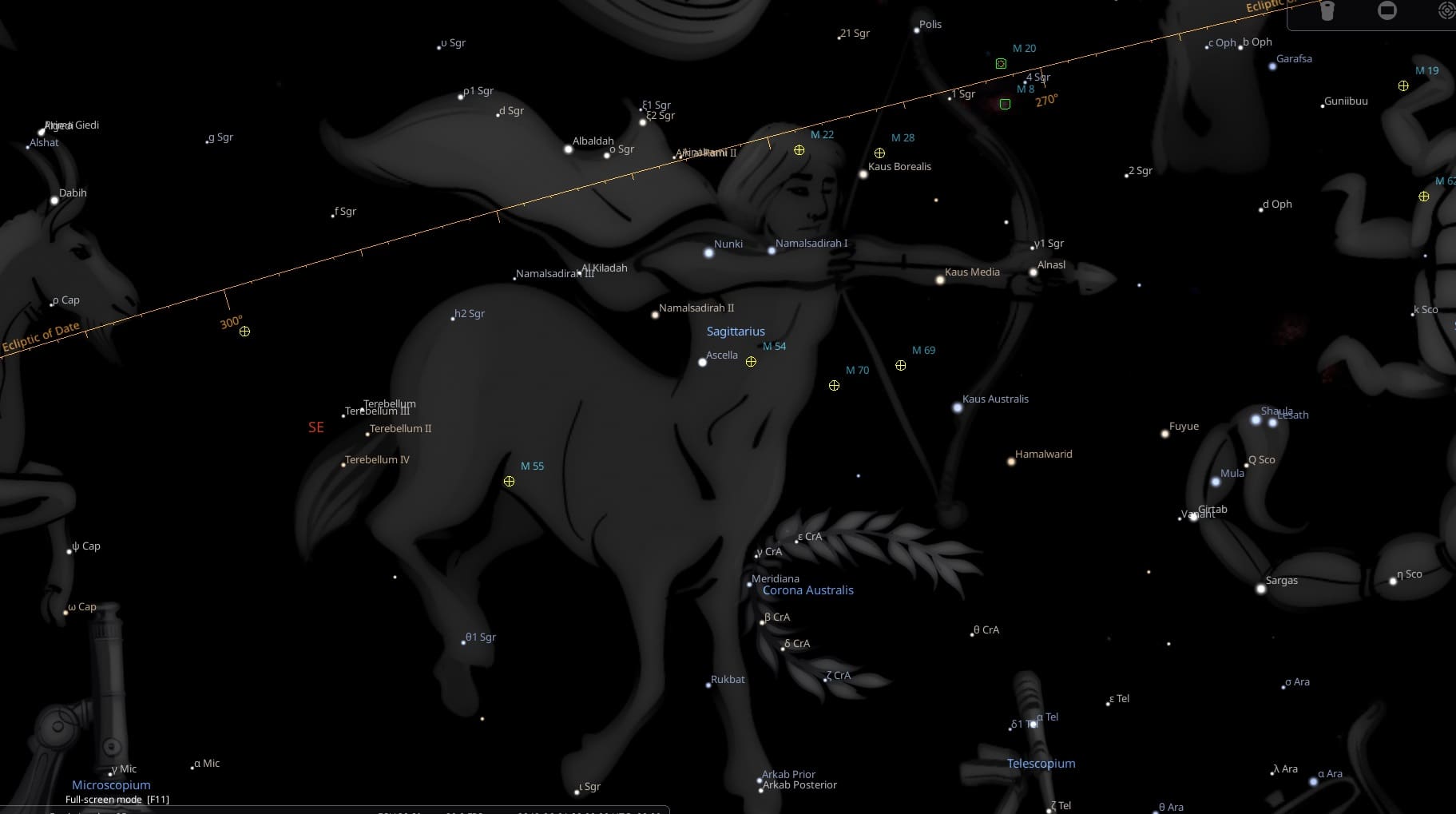
Sagittarius Constellation [Stellarium]
The Sun joins Tianfu on December 31
Fixed star Namalsadirah I, Phi Sagittarii (φ Sgr), is a 3rd-magnitude binary star system on the chin of the Archer, Sagittarius Constellation.
Magnitude 3.17, spectral type B8.5 III, color blue-white. [1]
φ Sgr has the proper name Alsadira Prima, meaning the “First Returning,” from a combination of the Arabic الصادرة al-Ṣādira, “Returning,” and Latin Prima, “First.” The original Arabic name listed by al Mouakket is Aoul al Sadirah, from awwal al‑naʿām al‑ṣādira, “The First Returning Ostrich.” Stellarium lists φ Sgr as Namalsadirah I, from the Arabic Al Naʽām al Ṣādirah, “The Returning Ostriches,” and “First.” [2]
In ancient Arabia, the two small groups of stars now marking the head and the vane of the Archer’s arrow were of much note as relics of still earlier asterisms and as a lunar station. The westernmost of these (γ, δ, ε, η) were Al Naʽām al Wārid, “the Going Ostriches;” and the easternmost (σ, ζ, φ, χ, τ) were Al Naʽām al Ṣādirah, “the Returning Ostriches,” passing to and from the celestial river, the Milky Way, with the star λ for their Keeper. [3]
φ Sgr belongs to the Chinese asterism Dou (Dipper), the 1st asterism of the 12th lunar mansion (Dipper). The astronomical name of φ Sgr is Dǒusùyī, “Dipper One.” It is also known as Nándǒuyī, “Southern Dipper One,” Lìngxīng, “Honored star,” Lùkù, “Storehouse of good fortune,” and Tianfu, “Treasure.” [4]
The Japanese equivalent of φ Sgr is Nanto, from Nanto, “Southern Ladle.” [5]
| 2000 | 2050 | Name | Orb |
| 06♑19 | 07♑01 | Kaus Borealis | 2°00′ |
| 08♑18 | 09♑01 | Facies | 1°00′ |
| 10♑11 | 10♑53 | Namalsadirah I | 1°50′ |
| 12♑23 | 13♑05 | Nunki | 2°10′ |
| 13♑38 | 14♑20 | Ascella | 2°00′ |
Namalsadirah I Astrology
Fixed Star Namalsadirah I has a spectral type of B8, indicating the planetary nature of Jupiter and, to a lesser extent, Venus.
JUPITER-VENUS: Contented, happy disposition, honorable, philosophical mind, legal or ecclesiastical preferment, help through women. If rising or culminating, honor and riches. [6]
SPECTRAL CLASSES B: A fondness for power, great authority, the ability to command, martial honors, kingly preferment, victory over enemies, liberality, cosmopolitan views and a higher spiritual nature, but few can respond. High honors, wealth, and renown are possible. [7]
Heavenly Treasure
In Chinese astronomy, Phi Sagittarii is the first star of the Southern Dipper asterism. It is known as the Fortune Star, the Star Lord of Destiny, the Southern Dipper Emperor Star, the Commanding Star, the Honored Star, but is most commonly called 天府 Tianfu, meaning “Heavenly Treasure” or “Heavenly Abundance.”
Tianfu is one of the 12 Main Chinese Fixed Stars. It is the ruling star of the Southern Dipper and belongs to the Yang Earth and the leadership type among the four major categories of major stars (pioneering, leadership, support, and cooperation).
Tianfu Personality
Tianfu was anciently called the “Commanding Star.” It makes you a natural leader with an innate air of authority that commands respect. But unlike an unapproachable, overly cautious emperor, you are carefree and easygoing. You prefer to grasp the big picture and get to the heart of the matter.
Your leadership style emphasizes achieving goals easily and efficiently. Therefore, you are meticulous about important matters but indifferent or unconcerned with trivial matters and minor details. However, you may fail to see the forest for the trees and lack the charisma needed for leadership.
You love giving orders, but also enjoy life, with an elegant demeanor, romantic nature and lively, charming eyes. However, you can also be careless, absent-minded, and prone to overthinking.
Tianfu was also, in ancient times, the “Lucky Star.” It governs wealth, land, and property. You have mass appeal and enjoy being in contact with people and being surrounded by them.
Of the 12 Main Chinese Fixed Stars, Tianfu gives the most refined lifestyle. You are particular about the quality of your living environment and your food, and you buy only the finest gifts. Since Tianfu is the “Star of Food and Clothing,” your expertise in these areas is naturally exceptional.
In other words, you don’t mistreat yourself, cannot tolerate bad environments, and are unwilling to compromise. When things are going well, you are carefree and happy, but what happens when you encounter adversity?
The most important things to have when facing adversity are the courage to change the status quo, the patience to persevere, and people who can help and support you. Unfortunately, these are your weaknesses. You lack patience and decisiveness, have a high opinion of yourself, and are unwilling to ask others for help.
Therefore, without self-development, you may criticize the current situation, complain about others, be too lazy to change, and have many grievances against your superiors. With resentment in your heart, you may develop an attitude of living for the moment and enjoying life to the fullest.
Advantages: Kind-hearted, easygoing, optimistic, helpful, not seeking fame or fortune, free and easy.
Weaknesses: Careless, complacent, lacking drive, pleasure-seeking, lacking decisiveness, and impatient.
Friends.
Tianfu instills trust, so you keep your friends’ secrets and love caring for the weak. You always help a friend who is in trouble. Most of your care and communication is on a spiritual level.
Career.
With concern about real estate, money, official rank and salary, you are well-suited for public office. Certain driving forces are needed to make people inclined to work and abhor leisure. Your driving force comes from the pursuit of status and the love of material enjoyment. You want status and enjoyment, but don’t like to work too hard. So you instinctively pursue efficiency.
Financial Management.
You generally have good saving abilities and enjoy an elegant lifestyle. However, you are frugal with your basic daily needs, so you accumulate considerable savings. But it’s important to make necessary investments. Otherwise, you might be labeled as stingy by those who don’t understand.
Consumer Views.
You tend to buy a lot of products and hoard inventory. If you like something, you will buy all the colors of it and keep it. You have a price-oriented mindset, believing that expensive things are good and judging quality by price. In addition, you are picky about food, so you are not stingy at all when it comes to spending money to eat well.
Relationships.
You value appearance and image, and will pay close attention to whether your partner has good taste in clothing and grooming. With an air of refinement and being a top-notch financial expert, you also value ambition and the ability to endure hardship when choosing a partner, as this ensures financial security and a stable life. However, focusing solely on finances can sometimes lead to spending less time together.
Tianfu with other fixed stars in the natal chart.
Tianfu and Kochab: Dignified and imposing, with strong leadership.
Tianfu and Mizar: Courageous and decisive, with appropriate responses.
Tianfu and Alioth: Optimistic, open-minded, dedicated, and sociable.
Tianfu and Tianxiang (τ Sgr, Namalsadirah I).
Among the fourteen major celestial bodies, Tianfu and Tianxiang have the closest relationship, yet this is often overlooked. The influence between Tianxiang and Tianfu is very direct. They are interdependent, one in two, two in one. The saying “When encountering Tianfu, look at Tianxiang; when encountering Tianxiang, look at Tianfu” refers to how these two stars deeply influence each other. If Tianfu is well-placed, but Tianxiang is not, then Tianfu will also be flawed; conversely, if Tianxiang is well-placed, but Tianfu is not, then Tianxiang will also be affected. [8]
Star Lord of Destiny.
The deity related to fixed star Tianfu is Si Ming Xing Jun, the Star Lord of Destiny. He is in charge of the Heavenly Palace. His functions cover the emperor’s lifespan and the prime minister’s rank and salary, as well as managing the lifespan, wealth and official rank of ordinary people. [9]
Constellation Dou the Dipper
03♑12 to 14♑50
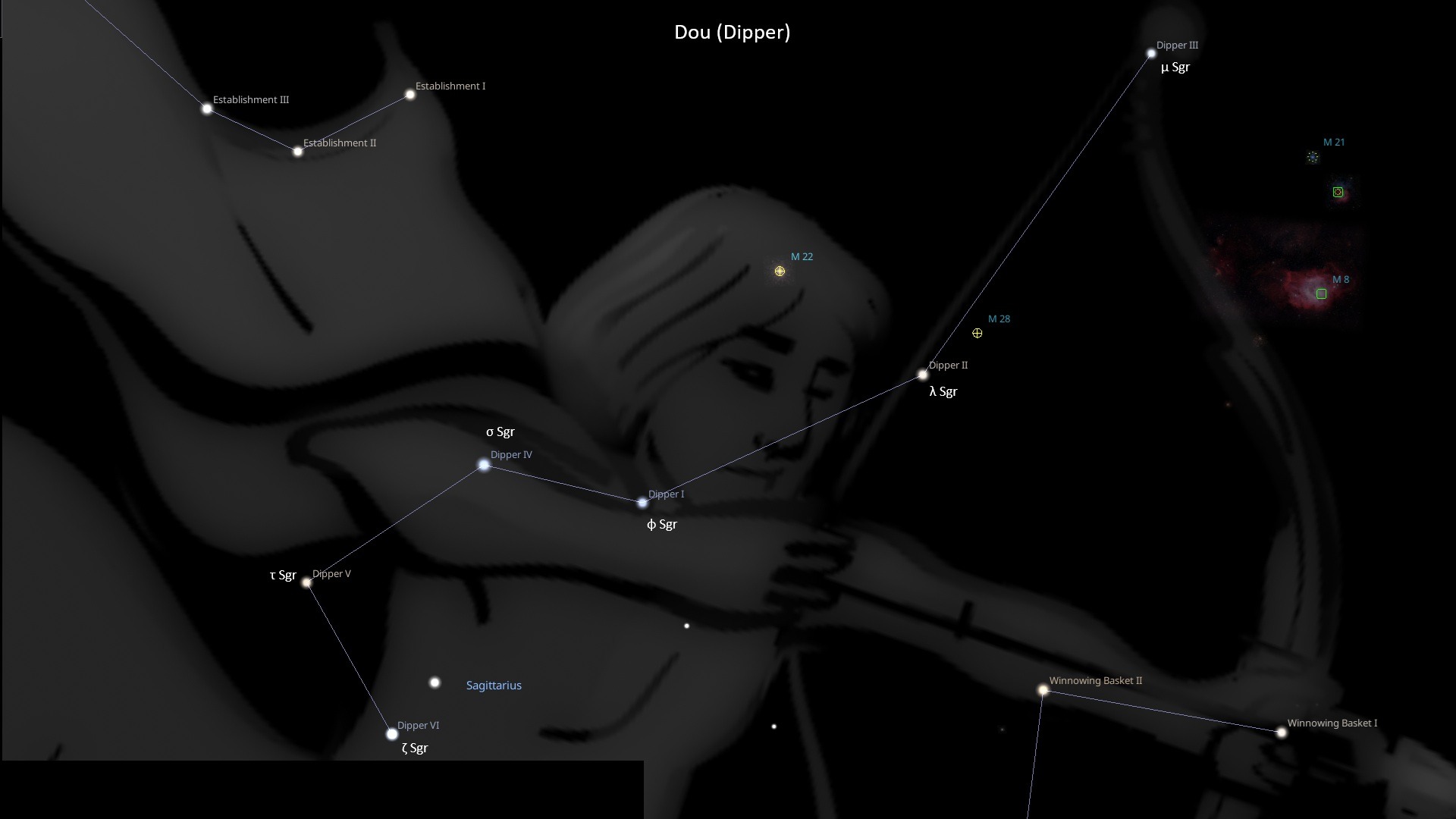
The Dipper constellation is the head of the Northern Black Tortoise, consisting of six stars shaped like a dipper. It is generally called the Southern Dipper. Together with the Northern Dipper, it governs the power of life and death. The ancients also called it Tianmiao, “Heavenly Temple,” and it was the star official belonging to the emperor. Ordinary people should not easily offend the emperor’s star; hence, it is often considered inauspicious. [4]
Dou constellation is auspicious for wearing new clothes and undertaking long-term projects. It is also suited for acquiring treasures, repairing gardens and forests, building vehicles and other vehicles, constructing fields, houses, cities, temples, and other auspicious structures. The construction of war equipment and other necessities is also auspicious. [10]
Dipper Personality
The Dipper represents the typical late bloomers. It gives a generally stable and reliable nature, a strong fighting spirit, a love of conquest, and a refusal to easily admit defeat. Dipper people are suited to riding horses and exploring mountains and forests. They love prayer and making friends with virtuous people. They are skilled in many arts and have abundant wealth. [15]
Those born under the Dipper become stronger when facing stronger opponents and weaker when facing weaker ones. They experience significant mood swings but possess the power to overcome adversity and are highly creative. However, they tend to be reserved and secretive, which can lead to misunderstandings, and they need a calm and stable mind. [10]
Song History (1346)
The six stars of the Southern Dipper (南斗) are the Heavenly Rewards and Salaries (official rank) Palace. It oversees the emperor’s longevity and symbolizes the positions of prime ministers in terms of titles and salary; classical texts refer to it as 天庙 “Tianmiao,” or the Heavenly Temple. It represents the positions of the Prime Minister and the Grand Minister, who are responsible for honoring virtuous individuals and advancing scholars in official ranks. It also oversees military affairs. Another name for it is 天机 Tianji (Heavenly Mechanism).
The two southern stars, Kui (魁), are known as Tianliang, the Heavenly Beam (天梁). The two central stars are Tianxiang, the Heavenly Minister (天相). The two northern stars are Tianfu and Ting. The southern star is also called Kuixing. It is also said that the southern stars are Kuixing (the Northern Dipper’s handle), while the northern stars form the dipper’s ladle.
The first star in this group is called Beiting, alternatively known as Tiankai or Fuwan. Shi Shen said: “The first Kui star governs Wu, the second Kuaiji, the third Danyang, the fourth Yuzhang, the fifth Lujiang, and the sixth Jiujiang.”
If the stars are bright and prominent, the king’s rule is peaceful; the emperor enjoys a long life, and generals and ministers work together harmoniously. If they appear dim or irregularly arranged, then officials of all ranks lose their proper order. If any star has sharp spines (mangjiao) or wavers, it indicates that loyal ministers are lost from the state, military conflict arises, and people suffer distress.
A solar eclipse in the Dipper signifies worry for generals and ministers, war, disaster for the empress, and war arises in the region of Wu. A solar halo signifies worry for the prime minister and unrest in the ancestral temple.
A lunar eclipse signifies famine in the corresponding state, minor war, and distress for the empress and her ladies-in-waiting. Three lunar eclipses in a year signify a general amnesty. A lunar halo signifies the death of a great general and a lack of harvest.
If the moon transits the Dipper, ministers and generals are demoted; winds and rains become irregular, and high-ranking officials face execution. Another divination: if the moon enters here, it signifies distress for the female ruler, with military conflict arising in the Zhao and Wei regions; an ominous color signifies the death of a minister.
If Mercury transits the Dipper, there will be floods, grain will not grow, and there will be war. If it remains for an extended time, warfare or mourning events arise.
If Venus transits the Dipper, military conflict and ministerial rebellion follow. If it remains or lingers, armies are destroyed and generals killed; if both Venus and Mars enter together, there will be a white blaze, and ministers will rebel. If it remains for a long time, the disaster will be great.
Mars in the Dipper signifies that an amnesty occurs, but there will be the destruction of the army and the killing of generals, and fire disasters; if it enters for twenty days, grain prices will be high; if it enters for forty days, there will be virtuous decrees; if it remains, there will be war and bandits; if it remains for a long time, the disaster will be severe; if it emerges from the Dipper and moves upward, the whole country will be worried; if it does not move, the ministers will be worried. If it enters, there will be conspiracies both inside and outside the court; if it remains for seven days, the crown prince will fall ill.
If Jupiter enters, there will be an amnesty or pardon; if it remains in place for a long time, floods and rising grain prices follow. If it remains for a hundred days, there will be military action and the death of high-ranking officials.
If Saturn afflicts, there will be rebellion or disorder; if it enters, there will be loss of territory; if it moves in retrograde, there will be earthquakes; if it emerges, enters, or remains for twenty days, a major mourning event occurs; if it remains, high-ranking officials will rebel; another divination: if Saturn moves in retrograde here, there will be floods followed by drought; if it remains for some time, the state produces many righteous and virtuous men.
If a guest star invades, war breaks out, and the country is in chaos; if it enters, feudal lords attack each other, there is much theft, severe drought, palace and temple fires, and high grain prices. If the guest star remains for seven days without departing, an amnesty will be issued.
When a comet invades, the ruler is worried; if it appears, there is plotting, and there will be floods, palace fires, subordinates plotting against superiors, and rebellious armies; if it enters, there will be fire and ministers will rebel.
When a meteor enters, barbarians come to pay tribute; if it invades, the prime minister is worried; in spring, it signifies longevity; in summer, it signifies floods; in autumn, it signifies the dismissal of ministers; in winter, it signifies ministers rebelling; if it is red and appears as a star, it signifies the death of a minister. When clouds enter, if they are pale, there will be much wind; if they are red, there will be drought; if they appear, there will be war and palace and temple fires; if they enter, there will be two red clouds, and there will be war; if they are black, it signifies disease.
If a comet invades, the ruler faces distress. If it exits this region, plots will arise, and there will be floods, palace fires, subordinates plotting against superiors, and rebellious armies; if it appears, there will be war, disease, and national worry.
When a meteor enters, southern and western barbarians come to pay tribute; the prime minister is distressed; subordinates plot against superiors; and rebellious forces arise. If it exits the Dipper, military conflict or disease follows, bringing distress to the state. In spring, it signifies the emperor’s longevity; in summer, floods occur; in autumn, the prime minister is demoted or removed from office; in winter, high-ranking ministers act rebelliously. If meteors appear red and exit, then a high-ranking minister dies.
When clouds enter, if they are pale, there will be much wind; if they are red, there will be drought; if they emerge, there will be war and palace and temple fires; if two red clouds enter, there will be war; if they are black, it signifies disease. [11]
Constellation Sagittarius the Archer
25♐56 to 02♒30
SAGITTARIUS. The Archer.
Legend. This constellation represents the wise and just Centaur Chiron, who was killed by accidentally dropping one of the poisoned arrows of Hercules upon his foot.
Influence. The following are Ptolemy’s remarks: “The stars at the point of the arrow in Sagittarius have influence similar to that of Mars and the Moon: those on the bow, and at the grasp of the hand, act like Jupiter and Mars . . . those in the waist and in the back resemble Jupiter, and also Mercury moderately: those in the feet, Jupiter and Saturn.” … By the Kabalists Sagittarius is associated with the Hebrew letter Vau and the 6th Tarot Trump “The Lovers.” [6]
Now called Sagittarius (Sgr), this constellation is the Domicile of Dianna and in classical times was also known as Diannae Sidus. It is a fortunate and fruitful constellation indicating events pertaining to kings or a large portion of mankind. [12]
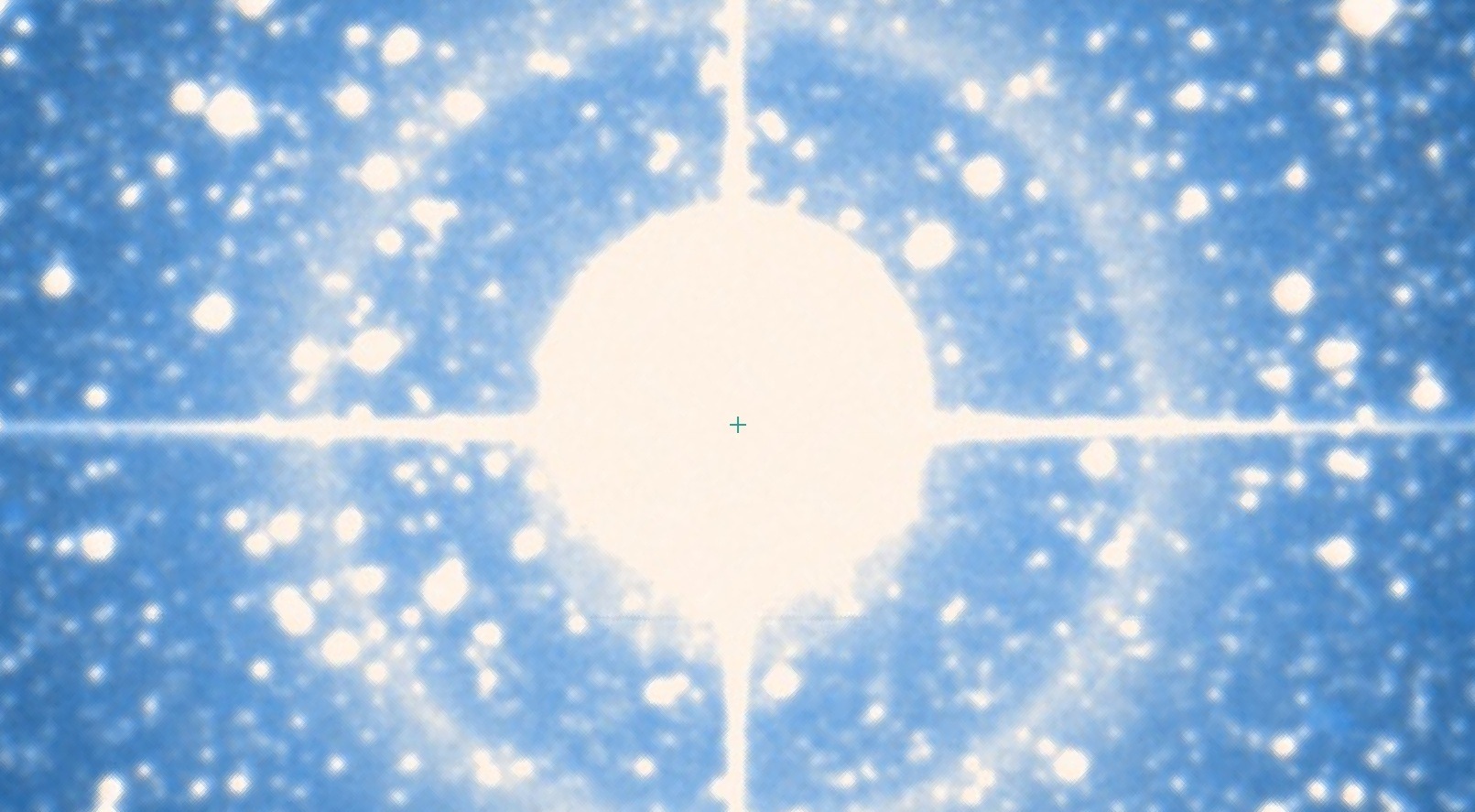
Phi Sagittarii, Namalsadirah I [SIMBAD]
Namalsadirah I Star Conjunctions
Namalsadirah I with harsh aspects or conjunct a malefic: Thick-skinned, treacherous, secretive, deceitful, prone to scheming, outwardly respectable but inwardly wicked. On the surface, appears respectable, virtuous and upright, but inwardly is wicked and very licentious. Hardship, legal troubles, and a lowly life.
Namalsadirah I conjunct Ascendant: Honor and riches (Jupiter-Venus nature). [6]
Thick eyebrows, medium build, full-figured but not obese, round or square faces, red lips and white teeth, and a distinctive appearance. [13]
Namalsadirah I conjunct Ascendant and well-aspected or conjunct a benefic: Possesses skills, a beautiful face with delicate features, and a noble destiny. [8]
Namalsadirah I conjunct Ascendant with harsh aspects or conjunct a malefic: An uncertain fortune. You may develop a concealing nature, which can sometimes become something shameful, all show and no substance, outwardly impressive but inwardly weak.
For women, this indicates wide cheekbones, a flat face, a crooked head, a sunken upper jaw, a messy hairline, a donkey-like nose, thin lips, short legs, cloudy, dry eyes, a dirty nature, a penchant for gossip, and a tendency to always cover their faces. [8]
Namalsadirah I conjunct Midheaven: Honor and riches (Jupiter-Venus nature). [6]
Colleen Stan 1°01′ (plus Sun, Moon).
Namalsadirah I conjunct Sun: Colleen Stan 0°33′ (plus Moon, MC).
Namalsadirah I conjunct Moon: Colleen Stan 2°25′ (plus Sun and MC).
Neptune: Dakota Johnson 0°22′. South Node: Trinity nuclear test 0°21′.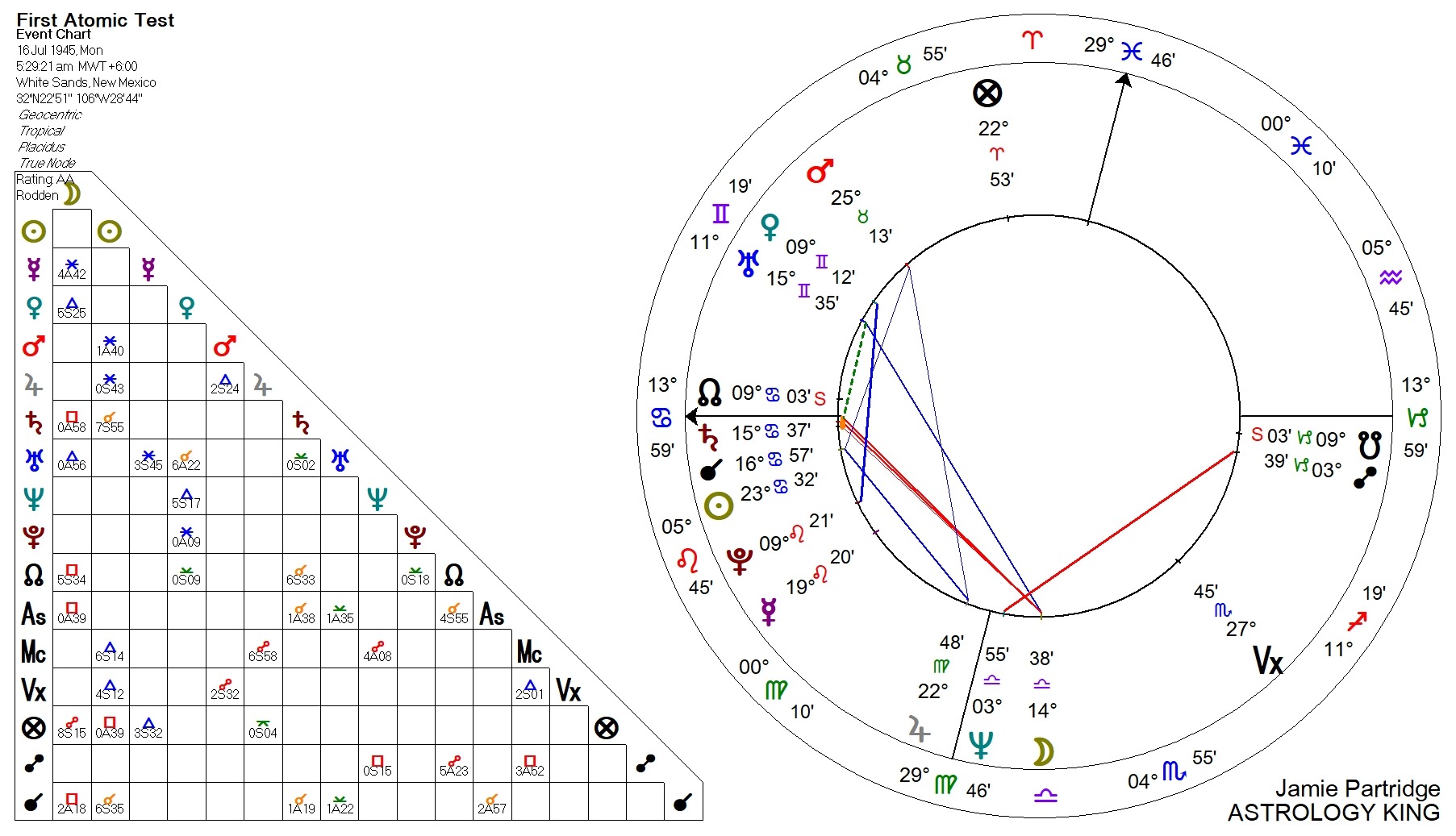
References
- Phi Sagittarii – Wikipedia.
- Phi Sagittarii – French Wikipedia.
- Star Names: Their Lore and Meaning, Richard H. Allen, 1889, p.359.
- Twenty-Eight Mansions – Baidu Encyclopedia.
- Sagittarius (constellation) – Italian Wikipedia.
- Fixed Stars and Constellations in Astrology, Vivian E. Robson, 1923, p.60, 99.
- The Power of the Fixed Stars, Joseph E. Rigor, 1979, p.245.
- Tianfu Star – Baidu Encyclopedia.
- Si Ming Xing Jun – Baidu Encyclopedia.
- Comprehensive Analysis | Unveiling the Personality of the [Dou Su] Constellation.
- Song History, Volume 50, Chapter 3, 1346.
- Fixed Stars and Judicial Astrology, George Noonan, 1990, p.50.
- Lesson 9 of Zi Wei Dou Shu (Purple Star Astrology): Southern Dipper Star System ① (Tianfu, Taiyin, Tianliang, etc.)
not understanding if this has anything to do with me. Aries march 28th 1973 10:56 pm born
Hi Soncirae. I don’t this you have this star in your chart. The best way to find out is to make your chart here. Compare the degrees of the planets to this list of major fixed stars. You can also pay $42 for me to work it out.
Xiai Xiai.
Xie Xie
Forgive the actual usage of Xiai Xiai… It’s actually how most of my Anglo Saxon friends pronounce XX .. .. .. (pun ‘note’ intended)but .. SURPRISE! Thanks for the respond Jamie. English learned Asian Reader should greatly appreciate your interest in all your forms of work. I do. Thank u again.(n.. mayb just hmm.. the Islamic golden age of astronomy with Al-Khwarizmi, Mayans and Brahmagupta can peak your interest in ..Ilm an-Nujūm….)
I would love to look more into those other cultures, but I will focus on China now because of the extensive written records. I am not sure if anything compares.
9th August daily tarot for Leo is not given.
Thank you Tina, I don’t know what happened there.